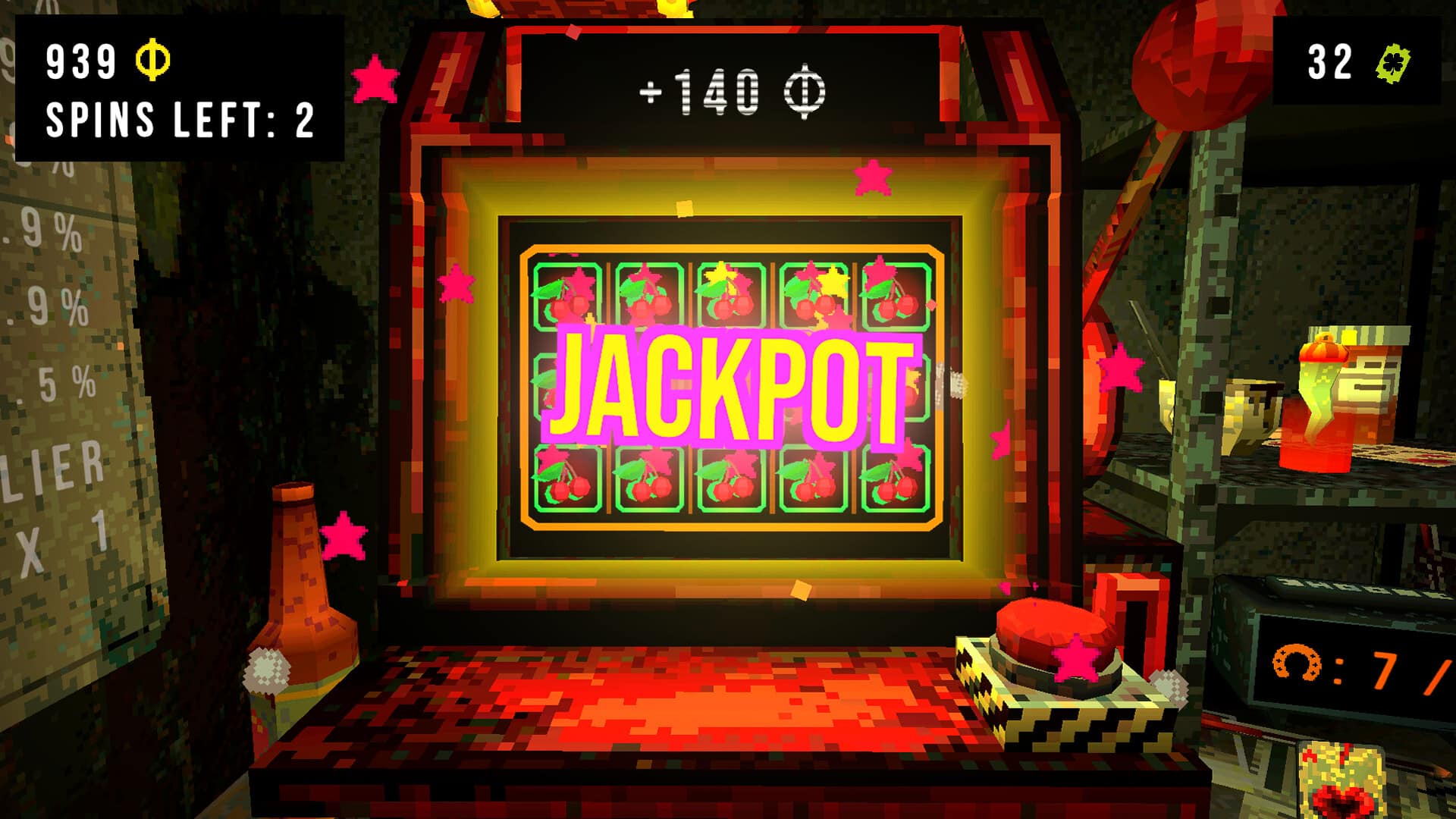
I picked up Cloverpit through Game Pass after hearing a steady stream of people saying it was far better than it had any right to be. Turns out they were right. It’s weird, twisted and oddly charming in that “this should not work but it does” kind of way. The idea of a gambling machine roguelike sounds like a joke, yet the game commits so hard to the bit that it becomes genuinely fun.
How the Game Works
On the surface, the goal is simple. You spin the machine, earn money and pay off the cost shown to level up. Underneath that, Cloverpit turns into a puzzle box of modifiers, items and strategies. You can manipulate the board to spawn more of certain fruit, build luck to tilt the odds, boost interest to snowball cash or stack effects that twist the outcomes in ridiculous ways.
It feels familiar if you’ve played other roguelike deckbuilders or slot-machine inspired games, but Cloverpit’s tone and systems give it its own flavour.
Where It Gets Clever
The game doesn’t do much hand-holding. It explains just enough for you to get started, then quietly steps back and lets you figure out what “winning” actually requires. Levelling up is important, but it’s not the whole goal. There’s something else the game expects you to track and manage as you progress, and discovering that is part of the fun. I won’t spoil it, but the moment it clicks is great.
The different approaches all feel viable at first. You can build a board focused on fruit spawns, chase randomness with pure luck or treat the whole run like an investment spreadsheet. I leaned into interest stacking mixed with a bit of fruit manipulation, and for a while it felt like a solid plan.
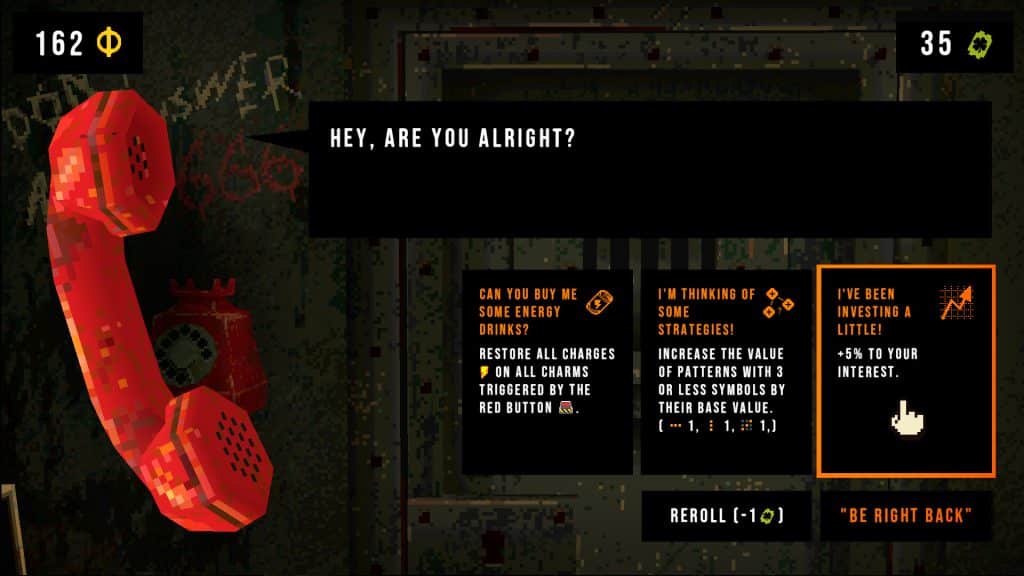
Where It Starts to Strain
Short and mid-term, Cloverpit hits a really nice groove. Runs feel varied, the humour lands and the mechanics have enough depth to keep you experimenting.
Long-term is where things wobble. Once you get deeper into the game, outcomes start leaning heavily on randomness. That’s fine in small doses, but after multiple runs it began to feel like my success wasn’t coming from smart play, just from hoping the machine felt generous that day.
I’ve played most of the game, unlocked the majority of achievements and even grabbed a number of wins, but right now I’m struggling to push myself back in. It’s still good, just not something I want to grind endlessly.
Should You Play It
Absolutely. It’s one of those games you need to try for yourself. The concept sounds daft but the execution is solid, and there’s an expansion coming that might tighten up the late-game balance. It plays well on Game Pass and is worth picking up on Steam if you like quirky roguelikes with a darker edge.
Score
A good game with plenty of charm. Not perfect, not something I want to binge forever, but definitely worth your time.